
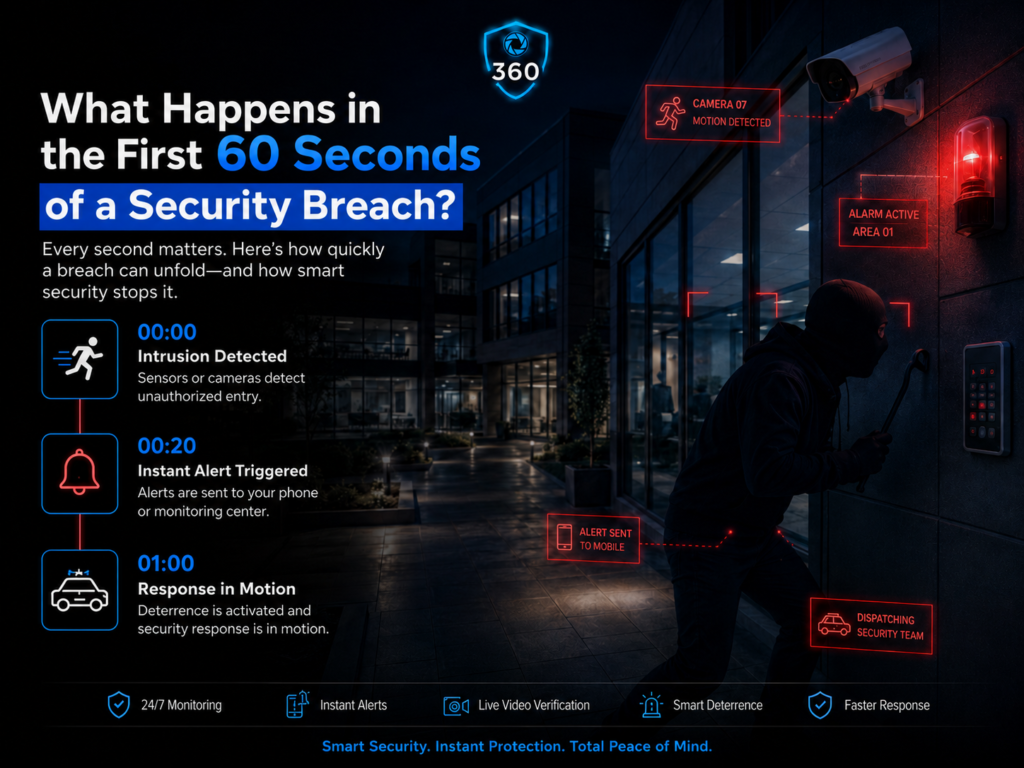
A security breach often starts quietly. Someone may approach a boundary, test a gate, force a window, or follow an authorized person through an access point. The first minute is critical because it determines whether the intruder is detected early or allowed to move deeper into the property.
A good security system should discourage entry, detect activity, verify the threat, alert responsible people, and preserve evidence. Here’s what may happen during the first 60 seconds.
Table of Contents
0–10 Seconds: The Intruder Reaches the Perimeter
The breach begins when someone enters a restricted area or tries to cross the boundary. Visible cameras, lighting, warning signs, and electric fencing can act as deterrents. Without active perimeter protection, the person may reach a door, window, parking area, or storage zone without triggering a response.
Useful perimeter protection includes electric fencing, cameras at gates and rear access points, outdoor motion detection, security lighting, and door or window sensors. A properly installed perimeter system creates the first opportunity to identify the threat before the main building is reached.
10–20 Seconds: Sensors Detect Unusual Activity
Once the person touches a fence, opens a protected door, or enters a monitored zone, the system should recognize the activity. This is where Security alarm systems Pakistan become important.
The alarm may activate a hooter, send a mobile notification, or trigger another programmed response. The sound can alert people inside, surprise the intruder, and make continuing the breach feel more risky.
EyeOn360 provides electric fencing, distress sensors, alarms, hooters, CCTV installation, and smart monitoring options for properties in Karachi.
20–30 Seconds: Cameras Verify the Threat
An alert alone doesn’t explain the situation. A camera should provide a clear view of the affected area. The owner, security team, or monitoring operator can then check whether the trigger was caused by an intruder, employee, animal, weather, or another harmless event.
Effective verification depends on correct camera positioning, clear night vision, reliable connectivity, working recording equipment, sufficient storage, and secure remote access. This helps people respond according to the real risk instead of reacting blindly.
30–40 Seconds: The Alert Reaches the Right Person
A modern system should send information to someone who can act, such as the owner, manager, guard, or monitoring team. Well-configured Remote monitoring solutions allow authorized users to view live footage without being in front of the local recorder.
Notifications should identify which zone or device triggered the event. A message such as “rear gate opened” is more useful than a general warning with no location.
EyeOn360 states that its CCTV installations support remote viewing and that its monitoring services let users check properties from another location.
40–50 Seconds: A Response Decision Is Made
After the threat is verified, the responsible person must decide what to do. This may include contacting on-site security, warning occupants to remain in a safe area, securing internal doors, activating more lighting, or contacting the relevant emergency authority.
The system shouldn’t encourage occupants to confront an intruder. Its role is to improve awareness and support a safer, faster decision.
Every property should have a simple response plan covering:
- Who receives the security alerts
- Who reviews live camera footage
- Who contacts on-site security staff
- When emergency assistance is requested
- How employees or family members are warned
- How important recordings are preserved
Clear responsibilities prevent confusion when every second matters.
50–60 Seconds: Evidence Is Recorded
By the end of the first minute, the system should have recorded the approach, entry point, direction of movement, appearance, and actions. Overlapping camera angles can reduce the chance of losing the person in a blind spot.
Reliable 24/7 surveillance solutions help document the event. Video files should be stored securely, protected with strong passwords, and exported promptly when needed so normal recording cycles don’t overwrite them.
EyeOn360 combines CCTV, alarms, sensors, remote monitoring, smart locks, and electric fencing as part of its internal and external security services.
Why the First Minute Matters of a Security Breach
The first 60 seconds can separate early detection from delayed discovery. A disconnected camera, silent alarm, failed storage drive, or unprotected boundary may give an intruder valuable time. An integrated system can identify the breach, verify the threat, notify the right people, and preserve evidence within the same minute.
Property owners should test alarms, alerts, cameras, storage, backup power, and remote access regularly. Security equipment only protects the property when every part works together. A professional assessment can reveal blind spots and help create a response plan suited to the property’s risks.