
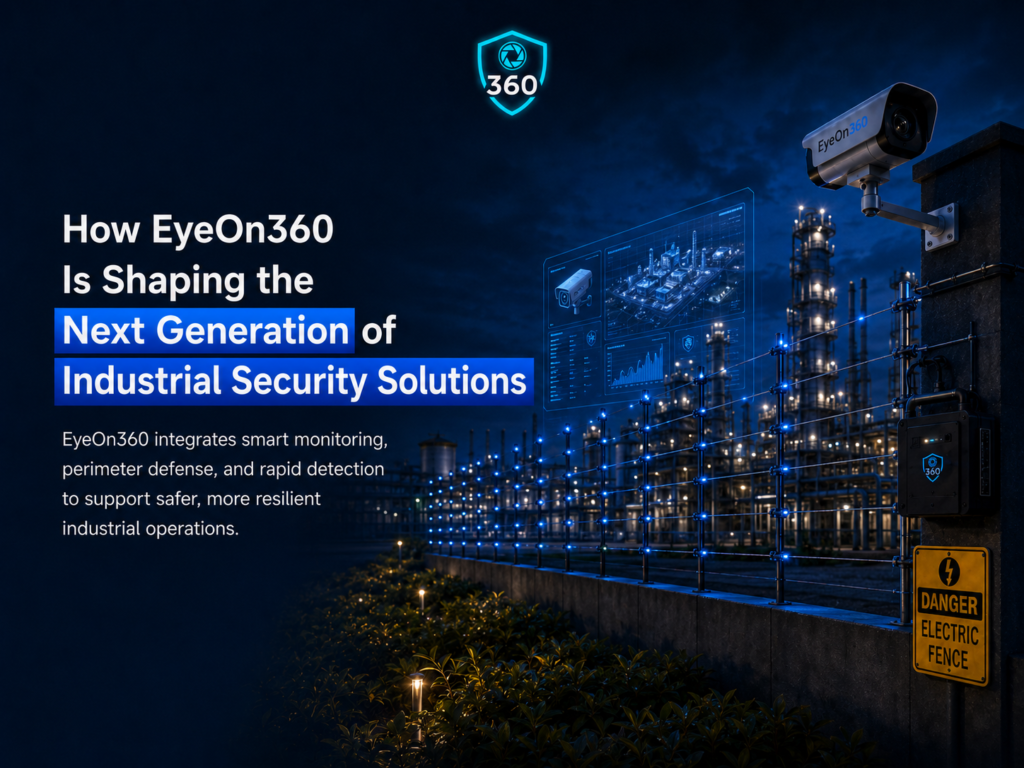
Industrial sites need more than cameras on walls and guards at gates. Warehouses, factories, fuel depots, construction yards, logistics hubs, and storage compounds face theft, trespassing, equipment damage, false alarms, and after hours movement. The next generation of security is not about adding more devices randomly. It is about building one connected view of risk, where cameras, fencing, sensors, alarms, access points, and monitoring habits work together. EyeOn360 is part of this shift by focusing on practical protection that helps site owners detect problems earlier, respond faster, and manage large spaces with better control.
Table of Contents
Why Industrial Security Is Changing
Older systems often recorded incidents but did not prevent them. A camera might show a theft after the loss has already happened, or a guard might discover a broken boundary during a late round. Industrial sites now need earlier warnings because losses can be expensive and downtime can damage customer commitments. Modern security combines detection, verification, and response. It helps managers know whether movement is a worker, animal, delivery vehicle, or real intrusion. This intelligence matters because large sites cannot depend on human attention alone every minute of the night.
Pressures Industrial Sites Face
- Expensive stock, cable, tools, fuel, and spare parts can attract repeated theft attempts.
- Large boundaries create blind zones where intruders can test weak points quietly.
- Night shifts and weekend closures leave fewer people available to notice suspicious movement.
- False alarms waste time, so alerts must be verified quickly and handled with discipline.
From Standalone Devices to Connected Protection
The future belongs to connected protection. Cameras should support alarms. Boundary sensors should trigger visual checks. Access records should help explain who entered sensitive areas. Lighting should improve detection rather than only brightening the site. When every part works alone, the security team receives scattered information. When the system is connected, managers get a clearer story. Industrial security systems are strongest when they combine layers, because one layer can confirm or support another before a threat becomes a serious incident.
Elements That Work Better Together
- Cameras placed for verification, not only general viewing across wide empty areas.
- Boundary detection that alerts teams before someone reaches valuable stock or equipment.
- Controlled access for gates, rooms, and restricted zones with clear activity records.
- Monitoring procedures that define who receives alerts and what action follows each event.
The Role of AI in Faster Decisions
AI can help industrial security by filtering ordinary activity and highlighting behavior that deserves attention. It may flag line crossing, repeated loitering, unusual movement near a fence, or activity in a closed area. This does not remove the need for people. It gives people better signals, so they spend less time watching empty screens and more time responding to actual risk. The real value is not the word AI itself. The value is faster understanding, fewer missed events, and more useful alerts for supervisors.
Practical Design for Pakistani Industrial Sites
Pakistan’s industrial locations often have dust, heat, power variation, mixed building ages, and busy vehicle movement. A good design must survive these conditions. It should consider camera placement, protected cabling, stable backup power, weather exposure, and maintenance access. Smart security systems Pakistan should also respect how local teams actually work. A solution that looks advanced but is difficult to manage will not stay effective. Providers can be useful when the design is practical, serviceable, and matched to the site’s daily routine.
Design Questions Before Installation
- Which areas hold the highest value assets and need the earliest warning?
- Where do people, trucks, and contractors usually enter, wait, park, or turn?
- Which zones are quiet after hours and therefore more vulnerable to intrusion?
- Who will receive alerts, check footage, contact guards, and record each response?
Why Monitoring Habits Matter
Technology is only one part of industrial protection. Monitoring habits decide whether alerts become action. A site needs a response map, escalation rules, contact numbers, incident logs, and routine testing. Without these habits, even good devices can become ignored noise. Supervisors should review frequent alarm points, check whether cameras are still clean and aligned, and update access permissions when staff or contractors change. This turns security into a living system instead of a one time installation.
Maintenance and Training Keep Systems Useful
Even the best design can lose value if teams stop testing it. Industrial cameras collect dust, lenses shift, sensors lose alignment, and cables can be damaged by weather or routine work. Staff also change, which means passwords, access rights, and response duties must be updated. Regular maintenance keeps the system honest. Short training sessions help guards and supervisors understand what each alert means, which areas matter most, and how to record an incident clearly.
This is especially important when different departments share one site. Security, operations, maintenance, and administration should all know the basic process. When people understand the system, they trust it more and use it better. That trust is what turns a modern installation into daily protection instead of another screen in the control room. Clear ownership also prevents small faults from becoming permanent.
Building Trust Through Prevention
The strongest security setup is the one that prevents loss before it becomes visible in accounts or operations. Better boundary awareness can stop intruders earlier. Better video verification can reduce panic and improve response. Better access control can limit internal confusion. Over time, these improvements help owners protect stock, staff, vehicles, and production schedules. EyeOn360 supports this direction by treating industrial security as a combination of planning, technology, and disciplined follow through.
Conclusion
Next generation industrial security is connected, layered, and practical. It does not rely on one camera, one fence, or one guard post. It links devices with monitoring habits and clear response rules so managers can act earlier. For industrial owners, the future is not just more equipment. It is better awareness, better verification, and a system that keeps working after installation day. That practical mindset makes complex sites easier to protect each night more reliably.