
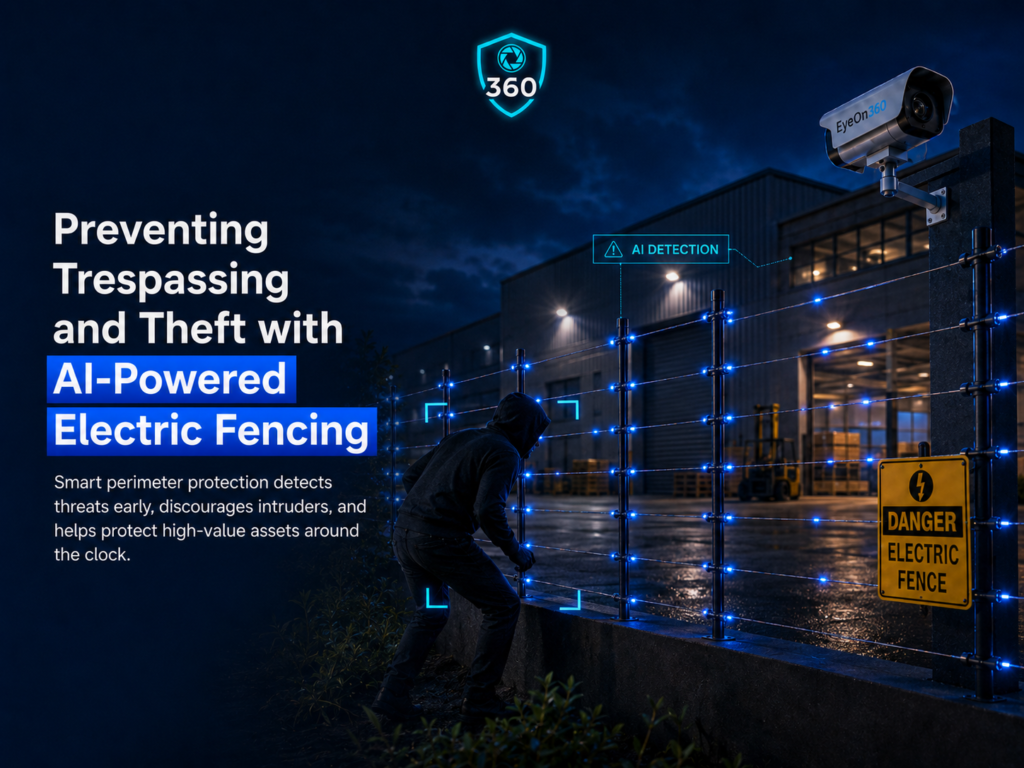
Trespassing and theft usually begin at the boundary, not at the storeroom door. An intruder studies dark corners, weak walls, quiet rear lanes, broken gates, and places where guards cannot see clearly. Traditional fencing creates a physical barrier, but modern sites need more than a barrier. They need early warning, fast verification, and a clear response path. AI powered electric fencing helps by combining deterrence with intelligent detection. EyeOn360 uses this layered approach to help factories, warehouses, homes, farms, yards, and commercial properties act before a small breach turns into a serious loss.
Table of Contents
Why Boundaries Need Active Protection
A passive wall can slow an intruder, but it may not tell anyone that a breach is happening. A camera may record the event, but it might not stop the person from crossing. Active fencing changes the situation by warning the intruder and alerting the property team at the point of contact. When AI is added, alerts can become smarter because the system can help separate ordinary movement from suspicious activity. This is useful where animals, wind, vehicles, and workers can create confusion around the boundary.
Common Boundary Weaknesses
- Rear walls that face empty plots, service roads, drains, or poorly lit streets.
- Gate areas where visitors, contractors, and vehicles create constant movement.
- Storage yards with expensive materials kept close to the outer edge.
- Buildings where guards cannot watch every side at the same time.
How AI Improves Electric Fence Alerts
Standard fence alerts may tell a team that contact happened. AI supported systems can add more context. They can connect fence activity with camera views, movement patterns, time rules, and defined risk zones. For example, an alert near a closed loading gate at midnight deserves different attention from activity during a scheduled delivery. Electric fencing Pakistan becomes more effective when it is planned for local weather, power conditions, site layout, and response habits rather than installed as a simple one size barrier.
Useful AI-Linked Features
- Zone based alerts that show which part of the boundary needs attention first.
- Camera verification that helps teams check the event before sending a response.
- Activity rules for working hours, closed hours, restricted areas, and high risk corners.
- Event logs that support investigation, insurance records, and management review.
Deterrence Still Matters
The visible presence of electric fencing can discourage many attempts before they begin. Intruders often choose the easiest target. A site with active boundary protection, warning signs, lighting, and quick alert handling looks harder to attack. This matters for both outside trespassers and repeated theft attempts by people who test routines over time. EyeOn360 can support this deterrent effect when fencing is paired with cameras and clear response planning. The purpose is not only to catch intruders. It is to make the property less attractive to them.
Reducing Theft Through Layered Response
Theft prevention improves when each layer buys time for the next layer. The fence warns at the boundary. Cameras confirm what is happening. Guards or supervisors receive instructions. Access records and logs help explain the event later. Anti-theft security systems work best when these steps are connected because theft is often fast. A few minutes can decide whether stock, cable, tools, batteries, fuel, or equipment leaves the site. A layered response gives the property team those minutes.
Response Planning Essentials
- Decide who receives each alert during work hours, weekends, and late night periods.
- Keep emergency contact numbers updated for guards, managers, and service teams.
- Test the fence, camera view, siren, and alert route on a routine schedule.
- Review repeated alarm points to find weak lighting, loose branches, or broken structures.
Where AI-Powered Fencing Is Most Useful
This approach is useful for factories, schools, villas, farmhouses, warehouses, construction yards, parking areas, depots, and solar sites. Any property with a long boundary or valuable assets can benefit from earlier warning. It is especially helpful where guards cannot see every side, where the site is quiet after dark, or where previous theft has shown a pattern. The system should be designed around the property, not copied from another location. Boundary length, wall height, power backup, nearby trees, camera angles, and local access routes all matter.
Choosing the Right Boundary Plan
A strong plan begins with a walkthrough. The team should identify likely entry points, valuable zones, staff paths, power sources, and places where cameras can clearly view the fence line. It should also consider how guards will move after an alert and whether lighting supports safe response. Good planning prevents overbuying equipment in low risk areas and underprotecting the corners that matter most. A custom boundary map makes installation cleaner, maintenance easier, and reporting more useful for owners. It also keeps future upgrades easier later.
Avoiding False Confidence
Electric fencing is powerful, but it is not magic. Poor installation, weak grounding, ignored maintenance, bad camera placement, and unclear response rules can reduce its value. Owners should ask how the system will be tested, how alerts will be handled, and how service issues will be reported. AI can improve decisions, but humans still need to review events and keep the process disciplined. EyeOn360 is most useful when the technology is matched with practical training and ongoing support.
Legal and Safety Awareness
A responsible system must consider safety signs, proper energizer selection, controlled installation, and safe distance from public contact points. The goal is to deter and detect trespassing while reducing unnecessary risk for residents, workers, visitors, and animals. Property owners should never treat fencing as a casual DIY job. The design should protect the site while respecting safe access, maintenance needs, and local expectations.
Conclusion
AI powered electric fencing helps prevent trespassing and theft by moving security to the boundary. It detects earlier, verifies faster, and supports a stronger response before intruders reach valuable areas. For modern properties, the best protection is visible, connected, maintained, and supported by people who know what to do when an alert arrives. That clarity helps owners respond quickly without guessing under pressure during emergencies.